

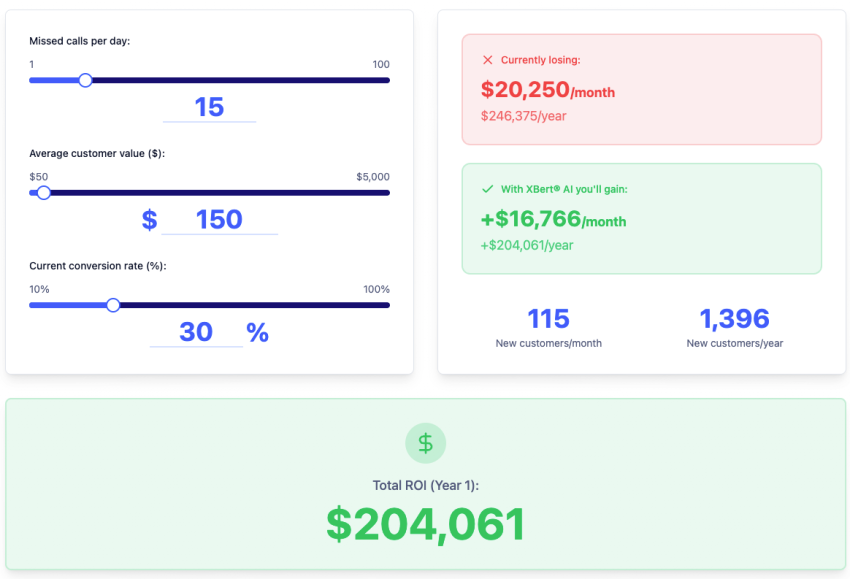
I talk to small business owners and revenue leaders every week, and the same frustration keeps coming up: Missed calls are killing their revenue, but they can’t afford to staff phones 24/7.
One plumbing company told me it was losing $40K a month to after-hours calls that went to voicemail. A healthcare clinic was paying overtime to overflow staff just to keep up with answering questions and managing appointment requests, and a home services business couldn’t keep up with summer demand without burning out its front desk.
This is increasingly the reality for most small and medium-sized businesses trying to compete in 2026.
The good news is that AI phone answering systems have evolved well beyond voicemail and basic auto attendants. Leading systems now function as autonomous voice agents capable of natural, two-way conversations that actually resolve customer requests.
The challenge, however, is cutting through the noise. Enterprise incumbents have big-name brand recognition, though their tools don’t always live up to the hype. Challenger brands, in some cases, are innovating faster for SMB use cases, but there are questions about longevity.
Not every AI answering service is viable, and the wrong choice means a wasted budget and frustrated customers. Business owners with tight budgets and limited resources are feeling the pressure.
I’m going to walk you through what actually matters when evaluating these systems, which providers I’d consider if I were in your shoes, and how to make a decision that protects your revenue and your customer experience.
See the best AI answering service in action
Answer questions and capture leads. Just minutes to add your 24/7 AI answering service.
Quick Comparison: Top AI Phone Systems
Every AI phone answering system serves a different purpose. Here’s a quick comparison of the leading platforms before we explore each one in detail.
| Provider | Best for | Key feature | Setup time | Standard integrations |
|---|---|---|---|---|
| Nextiva | SMBs & scaling teams | Unified communications platform | Minutes/hours | Salesforce, HubSpot, Outlook, Google |
| Retell AI | Conversational authenticity | About 600ms latency voice models | Days | Custom Webhooks, Zapier |
| Synthflow | Non-technical operators | Drag-and-drop no-code builder | Minutes | Calendly, GoHighLevel, Zapier |
| Bland AI | Developers building SaaS | Developer-first API infrastructure | Weeks | REST APIs, Custom |
| Rosie AI | Simple call handling | Native iOS/Android app management | Minutes | Zapier, Google Calendar, Calendly |
| PolyAI | Enterprise / regulated | Anti-hallucination guardrails | Weeks/months | Major enterprise CRMs & EHRs |
| SkipCalls | Contractors & tight budgets | Unlimited minutes on flat rate | Under 5 minutes | Google Calendar, Basic CRMs |
| JustCall | Sales & hybrid support | AI-assisted human co-piloting | Hours/days | Salesforce, HubSpot, Pipedrive |
What is an AI Phone Answering System?
An AI phone answering system is a software platform that uses artificial intelligence and natural language processing (NLP) to answer inbound business calls automatically. Serving as a 24/7 virtual receptionist or human receptionist alternative, it can engage callers in natural conversations, answer basic questions and customer inquiries, book appointments, and handle a wide range of customer interactions without human assistance.
What Defines a Modern AI Phone Answering System
Let’s be clear about what we’re talking about, because technology is evolving fast.
A few years ago, auto attendants and IVR systems were the common automated alternatives before modern voice AI, which could potentially frustrate any customers with more complex needs. IVR could route or manage call transfers, take messages, or help with straightforward tasks like answering frequently asked questions or processing payments.
Today’s AI phone answering service can now answer incoming calls and engage in real, human like conversations that sound human. These systems use generative AI and machine learning to understand customer intent. They can handle interruptions, ask clarifying questions, and complete tasks like booking appointments or qualifying leads.
AI phone answering vs. auto attendants vs. live answering services
Many businesses evaluating AI phone answering systems are deciding between AI, traditional auto attendants, and live answering services. While all three can answer calls, they provide very different experiences.
| Feature | AI phone answering | Auto attendant | Live answering service |
|---|---|---|---|
| Natural conversations | Yes | No | Yes |
| Appointment scheduling | Yes | Limited | Yes |
| Lead qualification | Yes | No | Depends |
| 24/7 availability | Yes | Yes | Usually costs extra |
| CRM updates | Yes (native) | No | Rare or manual |
| Scalability | High | High | Limited by staffing |
| Cost efficiency at scale | High | High | Lower service cost |
While there’s still a valuable place for advanced IVR systems, that’s no longer what we’d call an AI phone service.
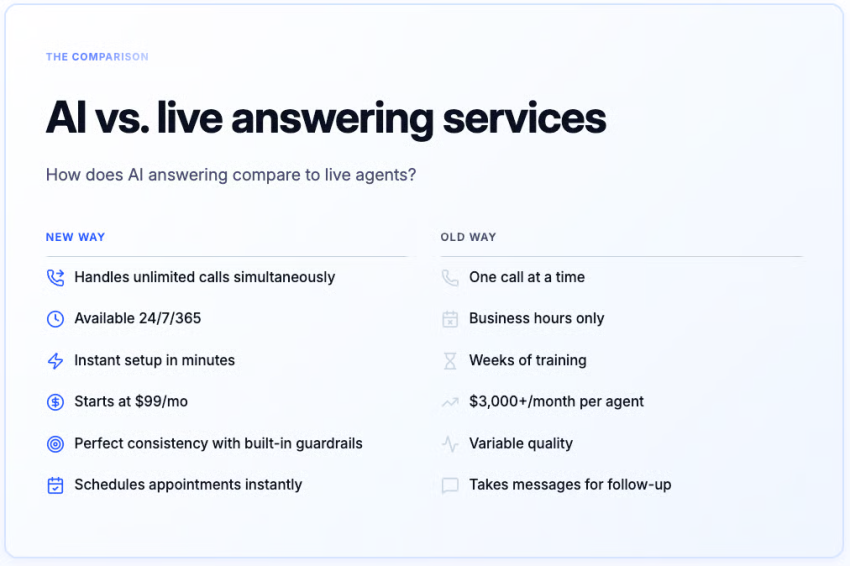
Why businesses are replacing traditional answering services with AI answering services
This isn’t just about automation. Most businesses are adopting AI phone answering systems because they can resolve customer requests faster, scale more easily, and operate at a lower long-term cost.
| Feature | AI Answering System | Traditional answering service |
|---|---|---|
| Response time | Instant, with no hold times or voicemail delays | Hold times may occur during peak periods |
| Pricing model | Typically subscription-based | Often billed per minute or per call |
| Capabilities | Books appointments, updates CRMs, answers questions, and completes workflows | Primarily takes messages and follows scripts |
| Scalability | Can handle large call volumes simultaneously | Requires additional staff as call volume increases |
| 24/7 availability | Standard on most platforms | May require additional staffing costs |
What Else Can Modern AI Phone Answering Systems Do?
Depending on the platform, modern AI phone answering systems can handle a wide range of customer interactions and business tasks, including:
- Deliver a professional initial greeting before identifying caller intent.
- Schedule appointments and reschedule appointments
- Qualify sales leads
- Answering customer questions
- Transfer calls to the right person or department
- Route calls based on intent
- Send SMS follow-ups and appointment reminders
- Update CRM records and crm systems
- Capture customer information, contact details, and business details
- Generate call summaries and transcripts with all the details
- Support multiple languages with multilingual support
- Analyze caller sentiment
- Trigger workflows in connected business tools and existing business systems
- Handle multiple calls and large volumes of concurrent calls
The strongest platforms combine these capabilities into a single workflow, allowing customers to resolve requests without waiting for a callback or speaking with multiple departments.
Key Trends Shaping AI Phone Answering Systems
The market is moving fast, but these are the key answering service trends that are currently shaping the industry in 2026.
Voice is becoming the primary 24/7 support channel
Let’s say you have an urgent call or urgent issue. Maybe you realized that you placed an order with the wrong shipping address, or your email software isn’t sending scheduled messaging right before a large sale.
Are you sending an email and hoping it gets seen quickly, or are you picking up the phone?
For most customers, the phone is still the fastest path for urgent, high-intent requests. Fortunately, Voice AI agents can now answer calls that chatbots alone couldn’t handle. They can help inbound callers with complex requests like rescheduling appointments or managing sensitive information compliantly.

Autonomous call handling is replacing message taking
The old model was fairly straightforward: AI agents answered routine calls and took messages, then humans would follow up.
Now, modern AI assistants complete end-to-end workflows during customer calls. They book appointments, update CRMs, trigger follow-up sequences, and resolve common requests without human intervention, which also helps eliminate manual data entry (though I’ll still always recommend big-picture human oversight).
From a revenue operations perspective, this is huge. Every manual callback creates friction and delays, and the reality is that churn risk increases with every hour between the customer’s initial contact and the resolution.
Autonomous handling removes those bottlenecks. AI assistants aren’t taking messages because they’re completing the tasks in full.
Industry-specific training is outperforming general models
I’m seeing a clear pattern: Generic AI phone agents struggle with industry terminology, compliance requirements, and nuanced scenarios.
For example, a general-purpose model might confuse HVAC diagnostics with IT diagnostics or fail to understand how to handle HIPAA-protected requests and document an entire call with a patient’s sensitive data.
HIPAA civil penalties can range from hundreds of dollars to more than $2 million per violation, depending on the level of negligence and whether the issue was corrected. The importance of industry-specific functionality can’t be overstated.
The best AI phone answering service providers now train on industry-specific data, ensuring better terminology understanding, lower error rates, and fewer escalations. Healthcare practices, home services, legal, and real estate businesses are seeing dramatically improved results with specialized models.
If you’re in a regulated industry or have specialized vocabulary, this matters. Generic AI creates liability.
Low-latency conversations are now expected
Early AI-powered systems felt robotic because they paused too long between responses, had robotic handoffs, or got stuck and started over when interrupted. Those glitch-outs were the death of customers’ trust (and the height of their frustration).
When answering calls, conversational pacing needs to feel natural. Now, the best systems are increasingly capable of responding instantly upon answering calls, handling interruptions more intuitively, and maintaining a rhythm that keeps callers engaged.
Best AI Phone Answering Systems for Businesses in 2026
Ready to choose the right AI answering service for your small business? Or are you looking for a voice agent capable of handling your enterprise’s needs? Either way, let’s take a look at some of the best providers in 2026, along with my honest opinion about when to choose each.
1. Nextiva
Nextiva is one of the best AI answering services for businesses of all sizes. It has native AI phone answering built into the larger unified communications platform, meaning you’re getting a true all-in-one solution.
What sets it apart:
- Single platform for all business phone calls, texts, chats, and bookings
- Intelligent call routing without the need for call forwarding
- Full visibility through transcripts, call summaries, analytics, and CRM context
- AI assistants with a complete customer conversation history
- No fragmented business tools or visibility gaps
- Works with your existing phone system
- Industry-specific solutions for regulated industries
With Nextiva, you’re getting enterprise features at an affordable cost with transparent pricing, and you can scale your plan as your business grows and call demand increases.
Best for: SMBs that want reliability, scale, and operational clarity.
Hear why XBert AI is the #1 AI Receptionist
Businesses are adding an AI receptionist to answer customer questions, capture leads, and schedule appointments.
2. Retell AI
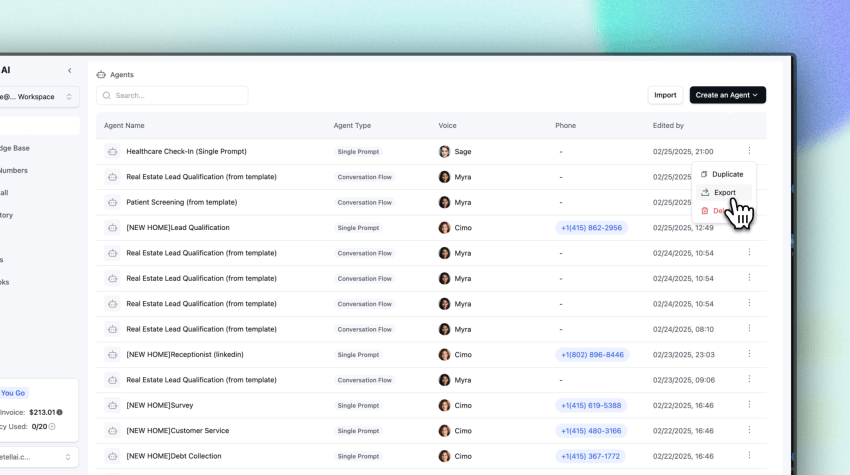
Retell AI is built for businesses where voice quality and conversational authenticity make or break customer trust.
What sets it apart:
- High voice quality that reduces caller friction
- Natural conversational flow maintained by near-instant response times
- High configurability for both inbound calls and outbound call flows
- Advanced conversation handling that adapts to caller behavior
Best for: Teams where voice authenticity directly impacts conversion and customer trust.
3. Synthflow
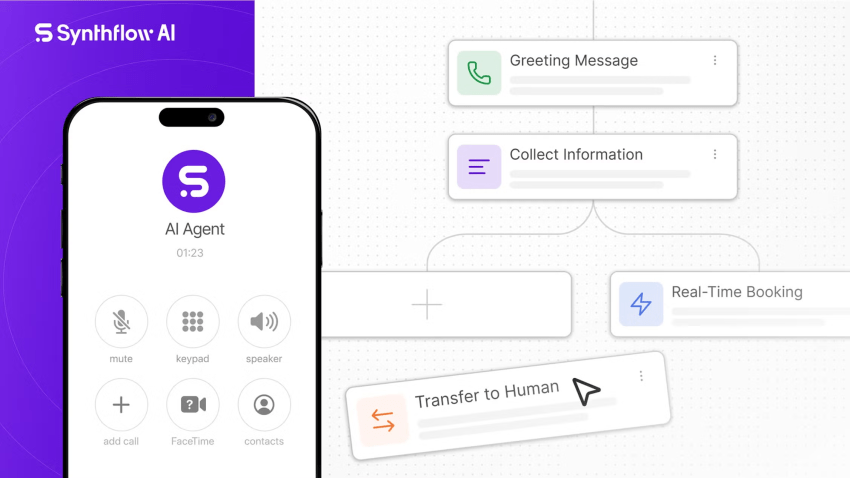
Synthflow makes AI phone answering accessible for non-technical teams, using drag-and-drop tools that let you build call flows without writing code or hiring developers.
What sets it apart:
- No-code builder for designing AI call workflows
- Strong multilingual and 24/7 answering support
- Fast deployment with minimal technical requirements
- Pre-built templates for common business scenarios
The AI voice agent is designed for speed, allowing it to be operational quickly.
Best for: SMBs needing fast deployment and flexibility without technical resources.
4. Bland AI
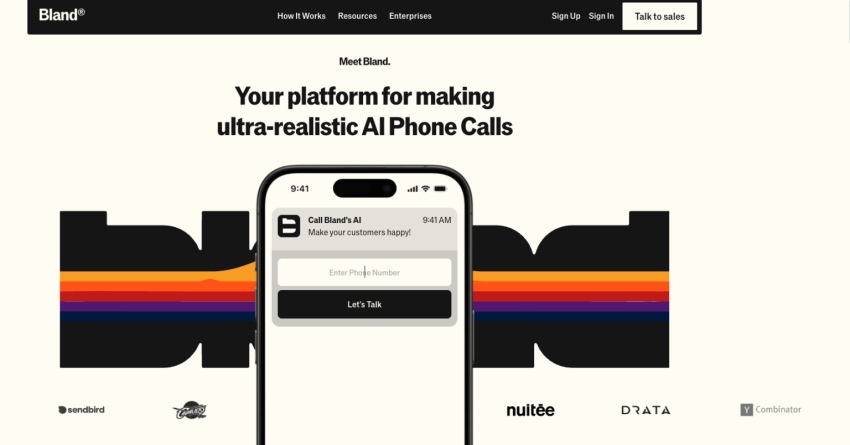
Bland AI is a developer-first platform built for technical teams that need to embed AI answering capabilities into their own products or complex workflows.
What sets it apart:
- Flexible APIs designed to handle inbound calls and outbound flows at scale
- Deep customization for edge cases and complex scenarios
- Developer-friendly documentation and support
- Built-in capabilities for embedding AI calling into SaaS products
- Full control over call logic and conversation flows
Bland AI isn’t a plug-and-play solution. It acts as an infrastructure layer for teams that want to build custom AI calling experiences.
Best for: Technical teams, developers, and teams with strong technical knowledge embedding AI answering into products rather than business operators.
5. Rosie AI
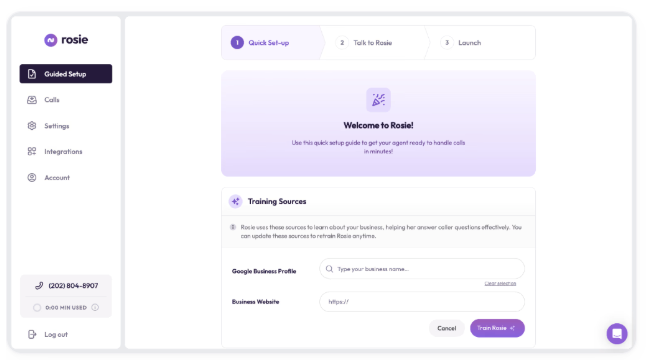
Rosie AI is an AI-powered voice agent that focuses on straightforward call answering, lead capture, and appointment coordination for small businesses that need reliable basics without complexity.
What sets it apart:
- Calls, messages, and basic appointment links handled
- Strong focus on notifications and lead capture
- Simple setup with minimal configuration required
- Reliable performance for routine call handling services
- Affordable pricing for basic AI answering needs
Best for: Small businesses needing straightforward answering without overcomplicating their tech stack.
6. PolyAI
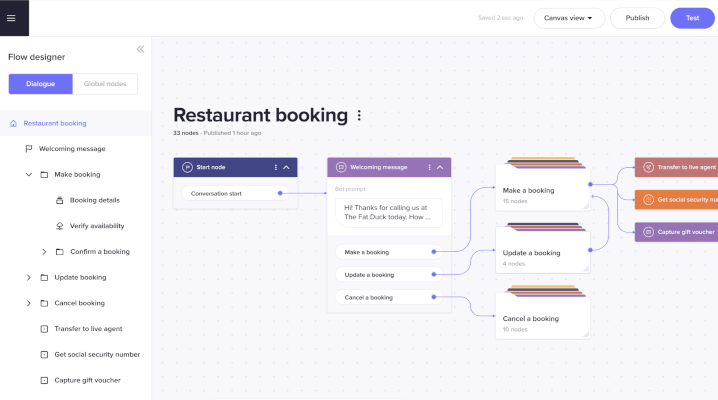
PolyAI builds voice-first AI answering systems specifically trained for industries with strict compliance requirements and nuanced customer interactions.
What sets it apart:
- Trained to reduce hallucinations and manage complex intent
- Industry-specific models for healthcare, finance, and regulated sectors
- Enterprise-level reliability and compliance support
- Sophisticated conversation handling for customer support concerns
Best for: Enterprise organizations and regulated environments requiring industry-specific accuracy and compliance.
7. SkipCalls
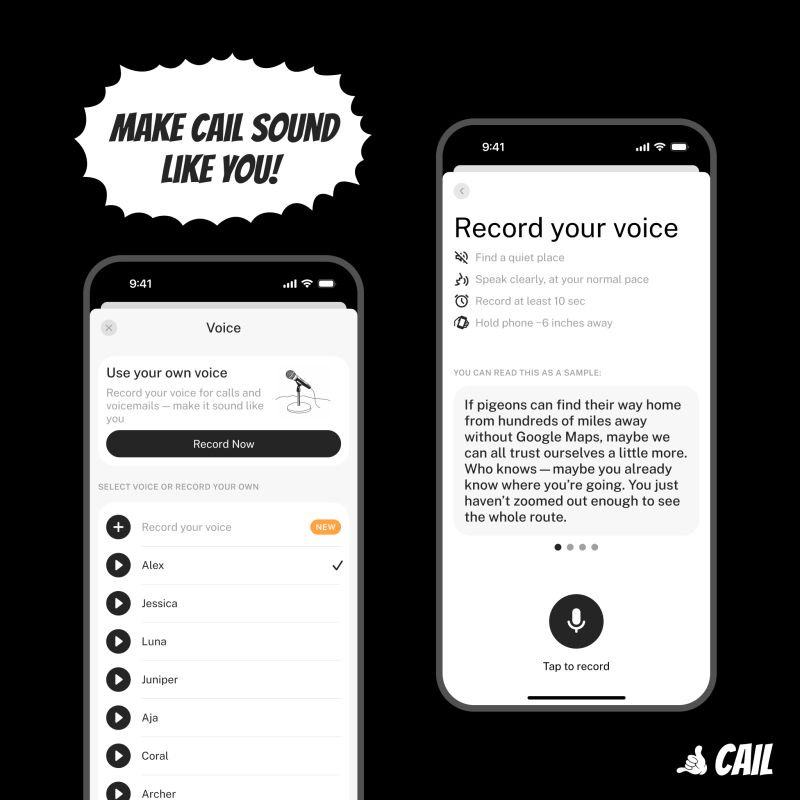
SkipCalls offers extremely low-cost AI phone answering with unlimited calls and basic bilingual support, making it accessible for budget-conscious businesses.
What sets it apart:
- Low-cost AI phone answering option
- Unlimited calls with basic AI answering
- Bilingual support for English and Spanish
- Simple setup with no complex features
Pro tip here: Keep in mind that lower pricing typically means less sophisticated AI, fewer integrations, and limited customization options.
Best for: Contractors and local service businesses needing affordable virtual receptionist coverage without all the bells and whistles.
8. JustCall
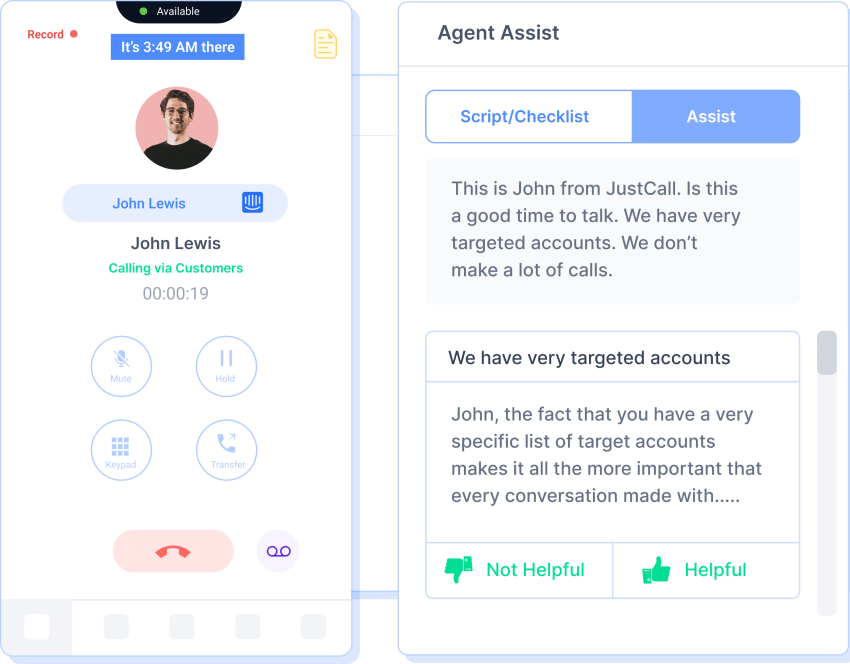
JustCall combines AI-assisted call answering with SMS follow-up, real-time transcription, and sentiment analysis for teams that want AI to support human agents rather than replace them.
What sets it apart:
- AI-assisted answering with human oversight (not fully autonomous)
- Real-time transcription and sentiment analysis during calls
- Strong CRM integrations and lead qualification for the sales team
- SMS follow-up automation post-call
Best for: Small teams focused on lead qualification that prefer AI-assisted answering rather than fully autonomous answering.
How to Choose the Right AI Phone Answering System
AI phone systems aren’t the same, so it’s understandable if you aren’t sure where to start when choosing an AI phone answering system for your organization. Here’s how I’d recommend choosing a system that works for you.
Start with call intent and volume
First things first: What is your standard call volume, and what types of business phone calls do you intend to have handled by an AI automated answering service?
High-stakes calls require stronger AI programming and advanced escalation logic.
If a client calls your law firm with an initial inquiry, your AI agent can qualify them and book a first appointment. But if you have an existing client with urgent, time-sensitive requests, they need to be able to reach you quickly without being stuck in an IVR spiral.
Simply put: If you’re fielding 50 calls a day and most of those are appointment confirmations, you likely don’t need enterprise-grade AI. But if you’re qualifying leads worth thousands of dollars or handling urgent customer issues, cheap solutions create expensive problems.
Look for end-to-end call ownership
The best AI phone agents aren’t routing calls and calling it a day; they’re autonomously resolving requests. This distinction is critical for revenue operations.
Make sure you ask if the system you’re considering can complete actions like booking appointments, updating records, or triggering workflows.
If customer conversations still end with “someone will call you back,” you’re paying for an expensive message-taking service.
Scrutinize pricing models
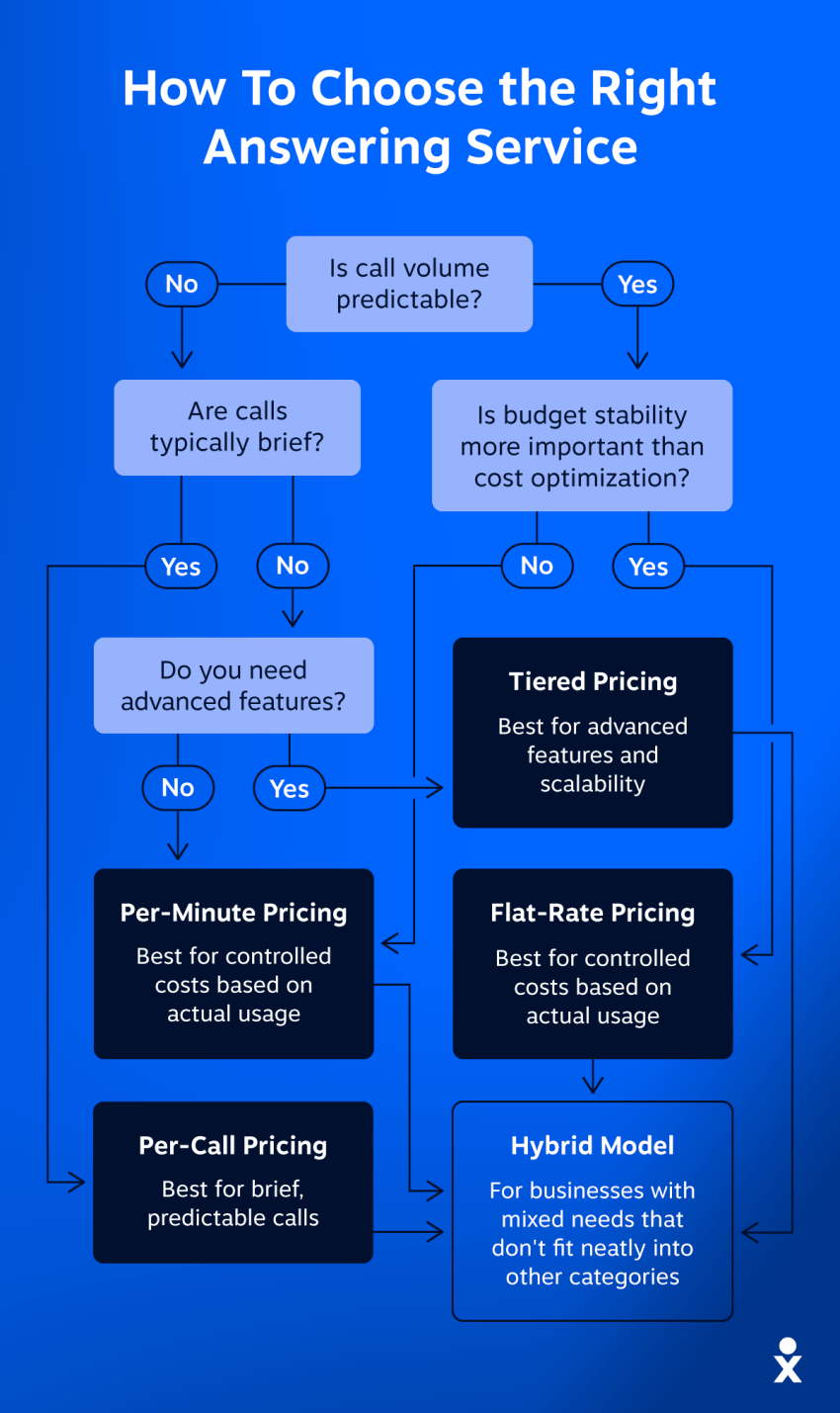
I’ve seen businesses get burned by per-minute pricing that scales unpredictably. If your average call is eight minutes and you’re paying $0.10 per minute, answering service costs add up fast. A hundred calls quickly become $80. Two hundred calls quickly become $160.
Depending on your business, I’d recommend understanding your total AI answering service cost and looking at providers with per-call or bundled pricing for cost control. Flat-rate pricing gives you predictable budgets and removes the perverse incentive to rush callers off the phone.
When evaluating AI phone systems, get clear pricing for your expected call volume. Many AI service providers advertise low entry prices, but charge significantly more at scale due to add-on features or overage pricing, especially when upgrading to a professional plan. Do the math before you commit and look at the total cost of ownership.
Demand oversight and transparency
You should always know what the AI told customers. This is basic quality control, and it’s an essential part of maintaining an effective AI system and a strong customer experience.
If a customer says, “Your AI gave me the wrong information,” you need a human agent to pull up the transcript and see exactly what happened. Systems without this visibility create liability and erode trust.
Look for platforms that provide:
- Full transcripts of customer conversations and overall customer satisfaction
- Searchable call summaries
- Analytics on call outcomes and resolution rates
- CRM integration to preserve customer data and conversation context.
Evaluate human escalation capabilities
Even the most advanced AI phone answering systems cannot resolve every customer interaction on their own. Some of your calls involve complex support issues, sensitive conversations, or situations that require human judgment.
I recommend looking for a platform that can identify when a conversation needs human involvement and automatically transfer the caller to the appropriate employee with the full conversation history attached. This eliminates the need for customers to repeat information and creates a smoother transition between AI and human support.
Review security and compliance requirements
If your business handles sensitive customer data, security and compliance should be key factors in your evaluation process. Industries such as healthcare, legal services, and financial services often operate under strict regulatory requirements that not every AI provider can support.
Before making a decision, ask vendors about their data encryption practices, access controls, call recording policies, HIPAA and GDPR compliance, SOC 2 certification, and data privacy measures, including whether customer data is retained or used to train public AI models.
Prioritize reliability and integrations
From a revenue operations perspective, integrations are non-negotiable. If your AI phone system can’t write to your CRM, integrate directly with existing systems, update your booking system, or trigger workflows, you’re stuck with manual data entry, which can defeat the entire purpose.
Uptime and call quality directly impact revenue. I’ve seen businesses lose thousands of dollars to system outages during peak hours. Dropped calls and garbled audio cost you customers, and some businesses still experience busy signals during outages.
Look for proven reliability, not just impressive demos. Ask about uptime SLAs, disaster recovery, and what happens when things break.
Never Miss a Call With Nextiva
While it’s understandable to be skeptical about the promises some companies make of AI-powered anything, I can attest firsthand that when it comes to AI voice agents, the technology works.
The business case is clear. Companies that implement AI phone answering systems can benefit from higher conversion rates, lower operational costs, and better customer experiences.
As we’ve moved beyond the experimental phase, we’re past the point of determining whether or not to adopt the technology. So now the question is which system to choose and how to implement it without creating new problems.
From everything I’ve seen working with SMBs and mid-market companies, the best professional answering service does three things:
- Protects revenue by ensuring that no high-intent call goes unanswered
- Maintains customer trust through natural conversations and reliable resolution
- Integrates into existing workflows instead of creating fragmented tools
At Nextiva, we’ve built AI assistants and AI receptionists natively into our larger communications platform because fragmentation is where most implementations fail. When your AI answering system operates in isolation from your CRM, your calendar, and your team’s workflows, you end up with missed handoffs and lost context.
The goal was to create a system that was reliable, practical, and ready for real customers, working for SMBs that need AI to function immediately without intensive setup or testing. We do this by treating AI phone answering as a core capability, not as an add-on.
Our AI phone agents (including our AI assistant, XBert) pull from past customer interactions, CRM data, and conversation history to deliver experiences that feel personal. And because it’s built into the same platform handling your calls, texts, and team collaboration, there’s no context loss when things escalate.
I’ve spent my career helping businesses connect sales and marketing activity directly to revenue. AI phone answering is one of the clearest ROI investments I’ve seen in years, but only if you choose a system that actually works and integrates with how your business operates.
Discover how AI voice agents can benefit your team. Check out Nextiva’s AI answering service and stop losing revenue to missed calls. 👇
Stop missing calls and losing business.
XBert AI gives your business 24/7 coverage—handles calls, texts, and chats, books meetings, and escalates urgent calls so customers never have a bad experience.
Frequently Asked Questions About AI Answering Service
Most AI answering services offer entry-level plans for less than $30 per month, while plans designed for larger companies typically cost around $100 per month. Pricing for AI answering services can range from $25 to $200 per month for small businesses, depending on call volume and features.
The cost of an AI phone answering system depends on the provider and pricing model. Some vendors charge a monthly subscription fee, while others use usage-based pricing that bills by the minute. Businesses with higher call volumes often benefit from flat-rate plans because they provide more predictable costs and make it easier to manage budgets as call volume grows.
AI voice agents can handle many routine tasks, including answering questions, scheduling appointments, and capturing lead information. However, most businesses still rely on human employees for complex conversations, sensitive situations, and high-value customer interactions. The best approach combines AI automation with the ability to transfer callers to a live employee when needed.
Modern AI phone systems sound far more natural than traditional automated phone systems. They can understand conversational speech, respond quickly, manage interruptions, and maintain a natural flow throughout the conversation. As a result, many callers may not immediately realize they are speaking with an AI voice agent.
When evaluating a service, you should avoid platforms that rely on rigid menu structures (like “Press 1 for Sales”) and instead prioritize models that can handle interruptions and open-ended dialogue naturally.
Some AI phone answering systems support HIPAA compliance, but not all providers do. Businesses that handle protected health information should verify that the vendor offers the required security controls, compliance safeguards, and Business Associate Agreements (BAAs) before deploying the system.
Setup time varies by platform. Some no-code solutions can be configured within minutes, while more advanced deployments that require custom workflows, integrations, and business-specific training may take several days or weeks. The timeline typically depends on the level of customization and the systems involved.
Most AI phone answering services do not offer completely free plans because they rely on advanced AI models, voice processing technology, telephony infrastructure, and third-party APIs that generate ongoing operating costs.
Some AI answering service providers offer free trials, demo environments, or limited usage credits so businesses can test call quality, integrations, and automation capabilities before committing to a paid plan, but long-term use typically requires a paid subscription. Trial lengths and limitations vary by provider.
Most AI answering systems can answer calls, understand caller intent, route calls, schedule appointments, capture customer information, and generate call summaries. Depending on the provider, additional features may include voicemail transcription, spam call filtering, call recording, CRM integrations, multilingual support, and workflow automation.