

Hess: Today, how do school or system leaders assess the quality of history materials?
Levey: In many places, the evaluation process involves leaders looking at sample lessons and relies heavily on publisher presentations. Sometimes, decisions are influenced by how visually appealing the materials appear or how many activities are included. What often receives less attention is the structure of the historical content being taught. The review tool helps leaders focus on the deeper questions and, we hope, demand more of publishers.
Hess: One of the Knowledge Matters Campaign’s guiding principles is that “history is a story and, for young students, should be taught as such.” What’s that mean in practice?
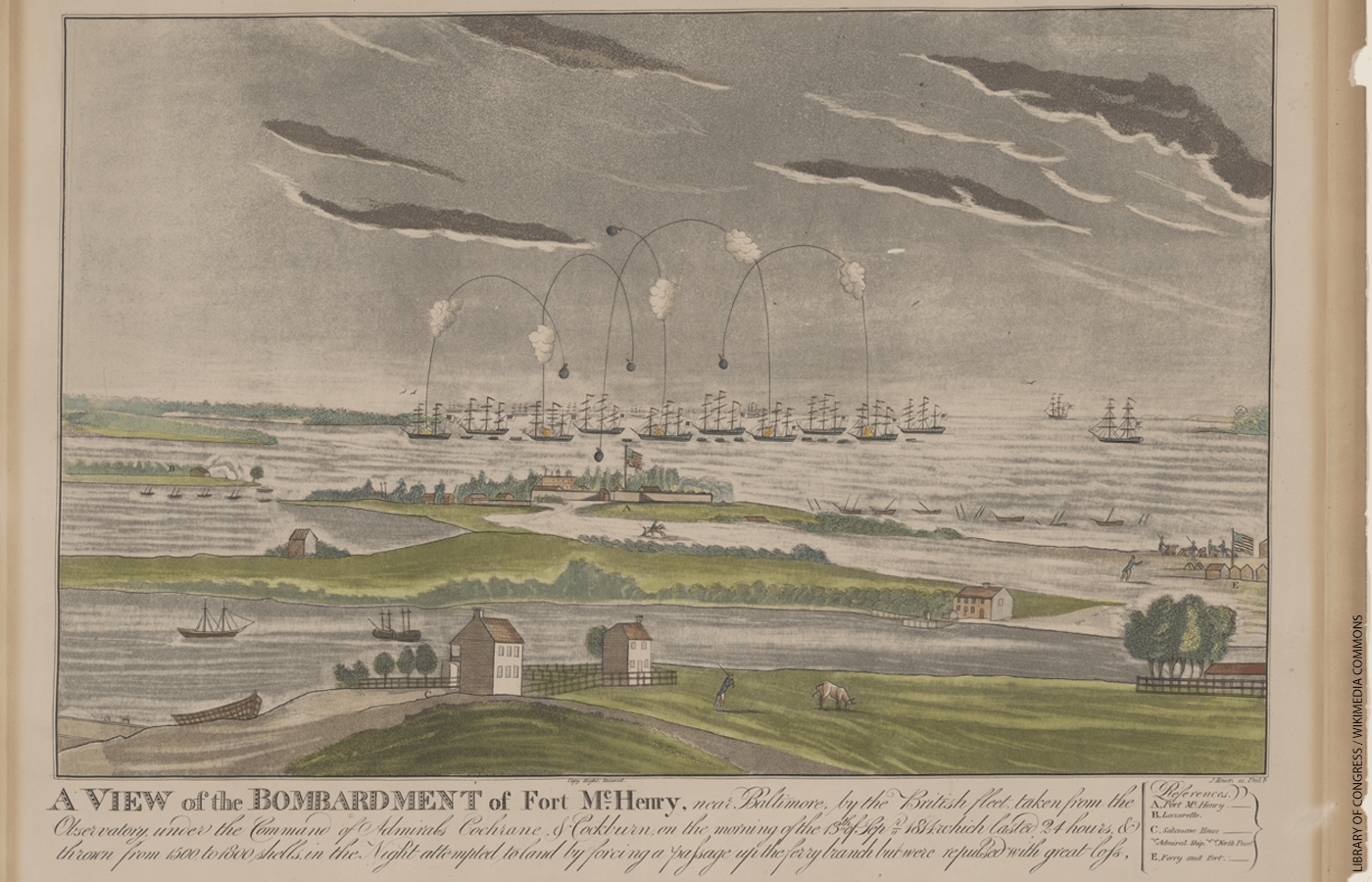
Levey: Cognitive psychology tells us that humans learn effectively through stories. We remember information more easily when it is tied to a narrative with characters and a beginning, middle, and end. History is naturally suited to this kind of learning. Students need to understand a sequence of events and a cast of characters involved in a historical period. In practice, that means presenting history as a connected narrative rather than a series of isolated topics. A 5th grade teacher in Arizona recounted that when she discusses the impact of the War of 1812, she can remind her kids, “Didn’t you read about that in 2nd grade?” Strong curriculum builds that narrative foundation across grades so that by the time students reach middle and high school they can analyze primary sources and debate historical interpretations with real understanding.
Hess: The National Assessment of Educational Progress has made clear that civics and history performance is abysmal. Any thoughts on why?
Levey: For decades, schools have steadily reduced the time spent on history and civics instruction, especially in elementary school. I saw this trend firsthand in all three of my kids’ schools going back two decades now. Their “curriculum” was a hodgepodge of materials that rarely connected from one year to the next. The schools offered little to no professional development to help teachers prepare. And in their understandable obsession with test results, the principals saw little reason to emphasize history. Education research tells us that when those subjects disappear in the early grades, students reach middle and high school without the foundation of knowledge needed to understand complex texts or civic ideas. The national assessment results reflect that long buildup.
Hess: History and civics education have been rife with concerns about ideological slant. Where does your tool fit in?
Levey: As you know, Rick, these disagreements are not new. The debate over what it means to be American is baked into our founding. We will probably never solve that. But by shifting the conversation toward substance, we hope the review tool can identify common ground. It asks whether a curriculum presents accurate narratives, draws on primary sources, and introduces students to the major people and events that shaped the country and the world. Those are questions we can agree on. Polling consistently shows that parents across the political spectrum want students to learn about difficult topics like slavery and civil rights. The disagreement is often about how those topics are framed and taught. The tool gives everyone a shared framework so those conversations can focus on the quality of learning.
Hess: Lots of history and civics initiatives have been launched over time, many with little impact. Why do you think that is, and what makes you hopeful this will be different?
Levey: Scolding students and teachers for not knowing the names of the nine Supreme Court justices or whether the phrase “checks and balances” appears in the Constitution is not an effective way to teach civics. Moreover, many prior civics initiatives were disparaged as “just politics.” What makes our initiative different is that it is driven by research demonstrating the instrumental impact of history and civics instruction on reading results. The idealistic view of the value of American history that you and I share is beautiful and admirable. I want kids to appreciate the boldness of the American experiment and understand where we have fallen short of our ideals. But I believe that presenting history and civics instruction as a solution to a practical problem—our kids’ declining literacy scores—makes our initiative more likely to succeed.
Hess: Your website posits that “civics is best learned through history.” This is in tension with the many existing civics curricula that emphasize current events. Why do you think history is so central?
Levey: Civics becomes meaningful when students understand how institutions and ideas developed over time. Concepts such as representative government or constitutional rights did not suddenly appear. They emerged through debates, conflicts, and compromises that unfolded across centuries. When students learn those stories, civics stops feeling abstract. They can see why certain institutions exist and how citizens have shaped them. Teaching civics through current events without historical context can drift into propagandizing, particularly in the youngest grades. History provides the foundation that allows students to understand our present debates in light of the past. Students who grasp that historical development are far better prepared to participate thoughtfully in democratic life.
Hess: For educators, what’s one piece of advice on how to better identify rich, rigorous history curricula?
Levey: Look closely at what students will read and discuss over the course of a year. Strong curricula present a clear sequence of events and ideas that build from lesson to lesson. Students encounter meaningful narratives and related primary sources that help them understand how the past unfolded. When that structure is present, classrooms feel different. Students begin asking what happened next and how one event led to another. When that structure is missing, history can feel like a random tour through disconnected topics. So, my advice is to focus on whether the curriculum provides a coherent story. Those are the materials that support deep historical learning.
This conversation has been edited for length and clarity.