

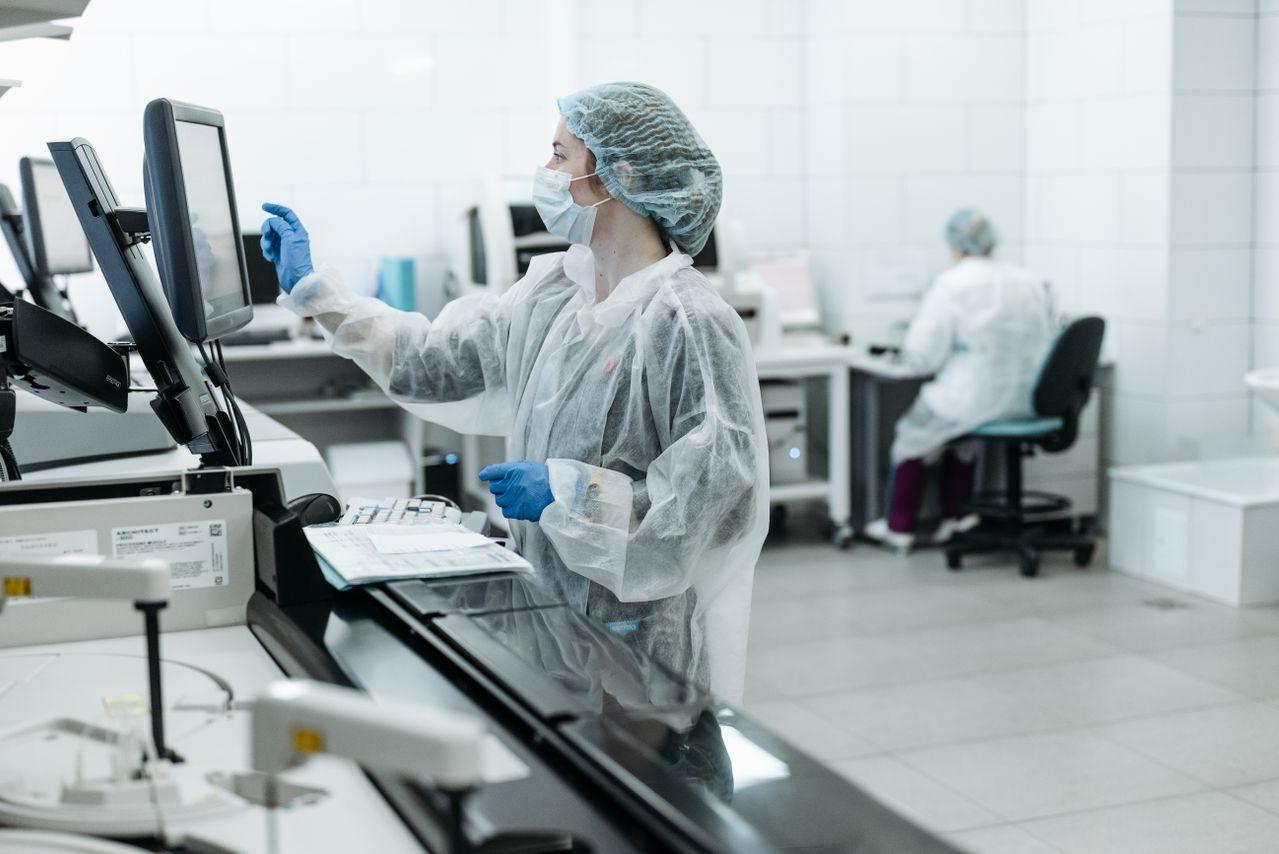
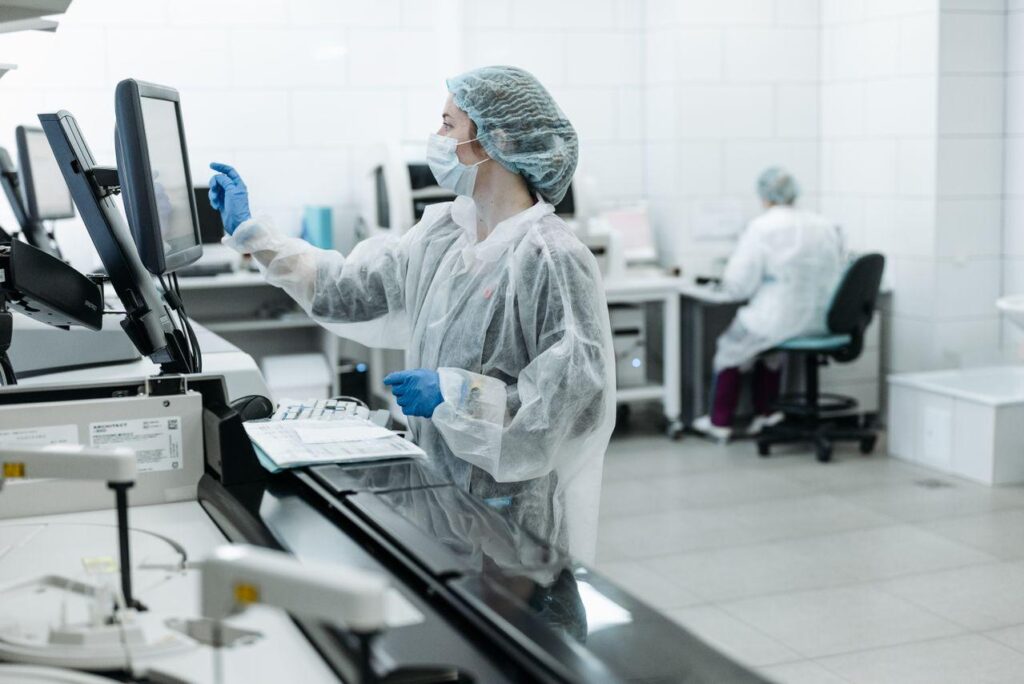
Photo by Pavel Danilyuk from Pexels:
Most biotech founders can tell you exactly how they’ll scale their team, their fundraising, their go-to-market plan. Ask them how they’ll scale the bench, and the answer is usually a shrug: “we’ll hire more people” or “we’ll deal with it when we get there.” That’s the gap. Lab automation for startups tends to arrive as a reaction to a problem, not as part of the plan, and by the time it shows up, the cost of waiting has already been paid.
The Bottleneck Nobody Budgets For
Software startups obsess over bottlenecks. Where’s the drop-off in the funnel, where’s the query that’s slowing the app down, where’s the step that doesn’t scale. Biotech founders apply the same instinct to fundraising and hiring, then walk straight past the bench, where the actual constraint usually sits.
Bioengineer Antoine Gueguen ran into this directly as a founding engineer at a metal-extraction startup, where biological experimentation quickly outpaced what his team could test by hand. In the early life of most hard-tech startups, progress gets measured by how many experiments can run before time, money, or people run out, not by revenue or market share. Gueguen put it plainly: manual systems fail through inconsistency and fatigue, and they cap how much you can even attempt to test.
His fix wasn’t a bigger team. He introduced robotic liquid handling and modular automation that ran continuously, and experimental throughput increased by roughly 25 times without a corresponding rise in headcount. That’s not a productivity anecdote, it’s a scaling lever most startups don’t know they have.
Why Manual Workflows Quietly Cap Your Runway
Manual pipetting works fine at small scale. It stops working the moment your sample volume, your team size, or your protocol complexity grows past what one careful person can hold in their head. Even among experienced staff, pipetting technique varies between operators and across days, and that variation propagates directly into results in ways that are difficult to trace after the fact.
That’s not a hypothetical cost. A widely cited figure puts the failure rate for drugs progressing from Phase 1 to final approval at around 90 percent, and inadequate replicability is one of the contributing factors. No single cause explains a number like that, but inconsistent early-stage data quietly stacks the odds against a program before it ever reaches a clinical trial. For a startup running on a fixed runway, that’s not a research footnote, it’s a fundraising risk.
Automation Isn’t Just for Big Pharma Anymore
The instinct to skip automation usually comes down to one assumption: it’s built for companies with ten times the budget. Most commercial automation platforms are designed for large pharmaceutical companies, with costs and capacities that outstrip what an early-stage startup needs or can afford. That’s a fair read of the legacy market, but it’s increasingly outdated.
What’s changed is the category itself. Compact liquid handler systems now exist specifically for labs that don’t have a dedicated automation suite or a six-figure equipment budget. A benchtop system that automates routine pipetting doesn’t ask a startup to redesign its workflow around it, it slots into the bench space already there and takes over the one repetitive task that’s eating the most hours.
That distinction matters more than it sounds. Gueguen’s emphasis wasn’t automation for its own sake, it was building modular, cost-conscious workflows that fit early-stage financial constraints without locking a team into a rigid process. A startup automating its first bottleneck isn’t buying a scaled-down version of a pharma system. It’s solving a different problem entirely: freeing scientists from repetitive manual work early, before the team doubles and the workload triples.
What “Automate Early” Actually Looks Like
Nobody automates an entire lab in one move, and trying to is usually a mistake. The startups that get this right treat it the same way they’d treat any other scaling decision: start with the single step that’s most repetitive, most time-consuming, or most prone to human variation, and fix that first.
“In productive startups, automation should be designed to change,” Gueguen said, and that’s the part founders miss most. A rigid system built for one fixed protocol becomes dead weight the moment the science shifts, and in a startup, the science shifts constantly. The point isn’t to buy the biggest system you can justify. It’s to automate the task that’s currently limiting you, in a way that can flex when your next experiment looks nothing like your last one.
The Same Instinct, Applied to the Bench
Founders already know not to run their fundraising pipeline off a spreadsheet forever, or their ops off sticky notes. The same logic applies to the lab, it just doesn’t get applied until something breaks. Treating lab automation as infrastructure you build early, rather than a fix you reach for once manual work has already slowed you down, is one of the more overlooked scaling decisions a biotech startup can make.